
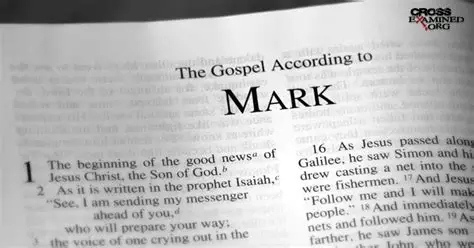
Recently I was led to read Mark James Luke and John. Just completed Mark and wow Mark covered so much that is very important like in Mark 1 Jesus found His first disciple Peter who was named Simon then. I also only realized while reading Mark that there are actually 2 Peters, 2 James and 2 Judas. 1 is Simon Peter, 1 is Simon the Zealot. 1 is James, son of Zebedee, 1 is James, son of Alphaeus. Simon Peter’s brother Andrew who introduced Simon Peter to Jesus is also a disciple. 1 is Judas the Iscariot, 1 is Judas Thaddeus.
In 1 John 9 Jesus was Baptized by John! The Baptism and Testing of Jesus
9 At that time Jesus came from Nazareth in Galilee and was baptized by John in the Jordan. 10 Just as Jesus was coming up out of the water, he saw heaven being torn open and the Spirit descending on him like a dove. 11 And a voice came from heaven: “You are my Son, whom I love; with you I am well pleased.”
Mark 4:35-40 is the part where Jesus was sleeping on the boat and the disciples woke Him to calm the wind and waves
Mark 5 is where Jesus healed the woman who was bleeding for 12 years and got healed by touching His cloak and also the where Jesus raised Jairus’s daughter up from the dead by saying Talitha koum!” (which means “Little girl, I say to you, get up!”).
John the Baptist was beheaded in Mark 6.
And it is also in Mark 6 that Jesus fed the 5000 with 5 loaves and 2 fishes.
And Jesus also walked on water in Mark 6!
He also feed 4000 in Mark 8.
Mark 14 is the last supper, Peter denying Jesus 3 times
Mark 15 is where Jesus was crucified and buried.
Mark 16 is where Jesus risen!
Previously I was led to read Proverbs and Ecclesiastes to find out and understand more about Solomon and forgot where I put the notes.
From now on would like to put the notes here if I do Bible study so can share and can refer back.
Mark 9:23 Everything is possible for one who believes
Belief here is not about saying the right words or having perfect faith.
It is about openness of heart.
True salvation is not a magic phrase, but a heart turning toward God.
Last-minute repentance can be real—but only God knows if it is genuine or transactional.
True Greatness Is Not Power — It Is Love That Serves
Mark 9:35 — “Anyone who wants to be first must be the very last, and the servant of all.”
Jesus overturns normal human hierarchy.
Normal human logic:
Power = control
Greatness = status
Leadership = being served
Jesus’ logic:
Power = self-giving love
Greatness = service
Leadership = lifting others
This is not about becoming weak.
It is about becoming so internally secure that you don’t need to dominate others to feel significant.
True greatness is the capacity to love, serve, and lift others without needing to control them.
Understanding Is About the Heart, Not Intelligence
Mark 4:14–20 — The parable of the sower (seed on good soil bears fruit)
The same truth can land differently depending on the heart that receives it.
Understanding is not just about intelligence.
It is about openness.
Some hearts are distracted.
Some are hardened by disappointment.
Some receive truth deeply and allow it to bear fruit.
What God reveals is not meant to stay hidden.
Truth is meant to illuminate life, guide others, and bring clarity.
Light is given so we can see, grow, and change.
Familiarity Can Blind Us
Mark 6:4–6 — “A prophet is not without honor except in his own town…”
People who “knew” Jesus growing up struggled to receive Him as He truly was.
Psychologically and socially:
People often resist seeing someone they once knew step into spiritual authority.
It challenges existing hierarchies.
It threatens our sense of control and certainty.
The issue was not lack of evidence.
It was lack of openness.
When the heart is closed, no amount of signs will ever be enough.
Seeing Is Not the Same as Understanding
One of the themes in Mark is that even the disciples struggled to understand Jesus, despite witnessing miracles.
They expected a powerful political Messiah.
They were not prepared for a suffering, self-giving Messiah.
Understanding Jesus required a transformation of worldview:
From power → to love
From dominance → to service
From avoiding suffering → to seeing redemptive meaning in it
Growth is slow because it requires reorientation of values, not just belief changes.
Jesus did not choose perfect people.
He chose people who were formable.
Welcoming the Least Is Welcoming God
Mark 10:15–16 — “Anyone who will not receive the kingdom of God like a little child…”
In the ancient world, children had no status or power.
Jesus’ teaching means:
How you treat the least significant person reveals how you receive God.
Spiritual maturity is measured by hospitality toward the powerless, not proximity to the powerful.
Salt, Fire, and Community Character
Mark 9:50 — “Have salt among yourselves, and be at peace.”
Salt in the ancient world represented:
Preservation
Purification
Covenant faithfulness
Fire represents testing and refining.
Discipleship involves refining experiences that purify motives.
Faith that is never tested becomes shallow.
Community life is meant to be:
Morally grounded
Free from rivalry
Rooted in peace, not power games
Following God Does Not Mean You Lack What You Need
Mark 10:29–30 — God’s provision for those who follow Him
Money itself is neutral.
Attachment to money becomes bondage.
❌ Prosperity theology: “Follow God and you’ll always be materially rich.”
✅ Biblical reality: “Follow God and you will not lack what you need for your calling.”
Many biblical figures were wealthy.
The issue is not possession — but possession possessing you.
Prayer, Forgiveness, and Inner Freedom
Mark 11:24–25 — Believe when you pray; forgive when you stand praying.
Prayer is not about control over outcomes.
It is about alignment of heart.
Unforgiveness blocks inner freedom.
Forgiveness is not approval of harm — it is release from inner captivity. – Wow God actually put in my heart to include forgiveness into my freedom workshop and I did it for the first time just in January and now this! It’s the same concept!
Core idea:
Understanding isn’t just about intelligence; it’s about openness. The same message can enlighten one person and pass over another depending on the heart.
What God reveals to you is not meant to stay private or suppressed. Truth is given to illuminate life, guide others, and bring clarity. Hiding it defeats its purpose.
He brings things into the light so people can understand, grow, and change.
With many similar parables Jesus spoke the word to them, as much as they could understand. He did not say anything to them without using a parable. But when he was alone with his own disciples, he explained everything. – Jesus always used parable a simple story used to illustrate a moral or spiritual lesson, as told by Jesus in the Gospels to teach people.
In short:
Pharisees were committed to God, but their framework for recognizing God’s work was too narrow.
Jesus had already healed, taught, fed crowds, cast out evil, and restored lives. The issue wasn’t lack of evidence; it was lack of openness.
Key principle:
When the heart is closed, no amount of signs will ever be enough.
And yes—you’re right to notice Jesus’ fatigue. Mark presents Jesus as fully human in emotion: He gets tired, grieves, feels compassion, and experiences frustration
Mark’s Gospel is structured to show:
- Crowds misunderstand Jesus,
- Religious leaders resist Jesus,
- Disciples partially follow Jesus but don’t fully understand Him,
- Even miracles don’t automatically produce insight,
- True understanding comes through the lens of the cross.
That’s why Jesus keeps asking:
“Do you still not understand?”
Not as condemnation, but as exposure of how deeply human frameworks resist being reshaped.
Jesus’ worldview overturns common human assumptions:
Common human worldview
- Power = control
- Greatness = status
- Winning = defeating others
- God favors the strong
- Avoid suffering
Jesus’ worldview
- Power = self-giving love
- Greatness = service
- Winning = faithfulness
- God sides with the lowly
- Redemptive suffering (the cross) is central
This is not just a change of beliefs, but a reorientation of values. That’s why it’s slow and difficult.
Jesus lives in continual dependence on God.
The disciples tried to exercise authority as technique, not from spiritual alignment.
Prayer here means relational dependence, not magic words.
Principle:
Spiritual authority flows from ongoing communion with God, not mechanical commands.
“Truly I tell you,” Jesus replied, “no one who has left home or brothers or sisters or mother or father or children or fields for me and the gospel will fail to receive a hundred times as much in this present age: homes, brothers, sisters, mothers, children and fields—along with persecutions—and in the age to come eternal life.
👉 The heart of Jesus’ teaching is not to trap people in shame, but to call people back to faithfulness, integrity, and healed love.
God redeems broken stories.
Money is neutral.
Attachment to money is spiritual bondage.
- ❌ Prosperity theology says: “Follow God and you’ll always be materially rich.”
- ✅ Biblical theology says: “Follow God and you will never lack what you truly need for your calling.”
God’s abundance is not always financial luxury; it is spiritual sufficiency + provision for purpose.
Many biblical figures were wealthy (Abraham, David, Solomon, Lydia, Joseph of Arimathea).
The issue is not possession, but possession possessing you.
True salvation is not a magic phrase, but a heart turning toward God.
Last-minute repentance can be real—but only God knows if it is genuine or transactional.
Grace is free.
Grace is not cheap.
Jesus is not offering religious comfort.
He is offering soul freedom.
He is confronting:
- Attachment
- Idolatry
- Control
- False security
- Performative religion
But He ends with hope:
“With God, all things are possible.”
Meaning:
- Even deeply attached hearts can be freed.
- Even broken marriages can be redeemed.
- Even rich people can be saved.
- Even late repentance can be accepted.
- Even fearful believers can grow into trust.
True greatness = the capacity to love, serve, and lift others without needing dominance.
This is not “become weak.”
It is become internally powerful enough that you don’t need to control people to feel significant.
Your worth does not come from rank.
Your worth comes from love.
God is love.
But love in the Bible is not sentimental permissiveness.
It is:
- Truthful
- Sometimes confrontational
- Always aimed at inner freedom
When religion becomes:
- Fear-based
- Control-based
- Superiority-based
…it has drifted from the spirit of Christ into institutional ego.
That’s not God. That’s human distortion of God.
Therefore I tell you, whatever you ask for in prayer, believe that you have received it, and it will be yours. And when you stand praying, if you hold anything against anyone, forgive them, so that your Father in heaven may forgive you your sins.”
The Greatest Commandment
“The most important one,” answered Jesus, “is this: ‘Hear, O Israel: The Lord our God, the Lord is one. Love the Lord your God with all your heart and with all your soul and with all your mind and with all your strength.’The second is this: ‘Love your neighbor as yourself.’ There is no commandment greater than these.
And these signs will accompany those who believe: In my name they will drive out demons; they will speak in new tongues; they will pick up snakes with their hands; and when they drink deadly poison, it will not hurt them at all; they will place their hands on sick people, and they will get well.”
The Core of the Faith
Mark 12:29–31 — Love God, Love Your Neighbor
The heart of Jesus’ teaching is not shame-based control.
It is love-based transformation.
God is love —
but biblical love is not permissive sentimentality.
It is truthful, sometimes confrontational, and always aimed at inner freedom.
When religion becomes:
Fear-based
Control-based
Superiority-based
…it drifts from the spirit of Christ into human distortion of God.
Closing Reflection
Mark does not present a comfortable religion.
It presents a reorientation of how we understand power, success, faith, and love.
This is not about winning or losing.
It is about becoming.
Becoming more loving.
More free.
More aligned with truth.
More grounded in humility and self-giving love.